Catch of the Month — August 2026 | Trouvailles du mois — Août 2026
Tonnerre-des-Bois
Par Magdalena Nitchi
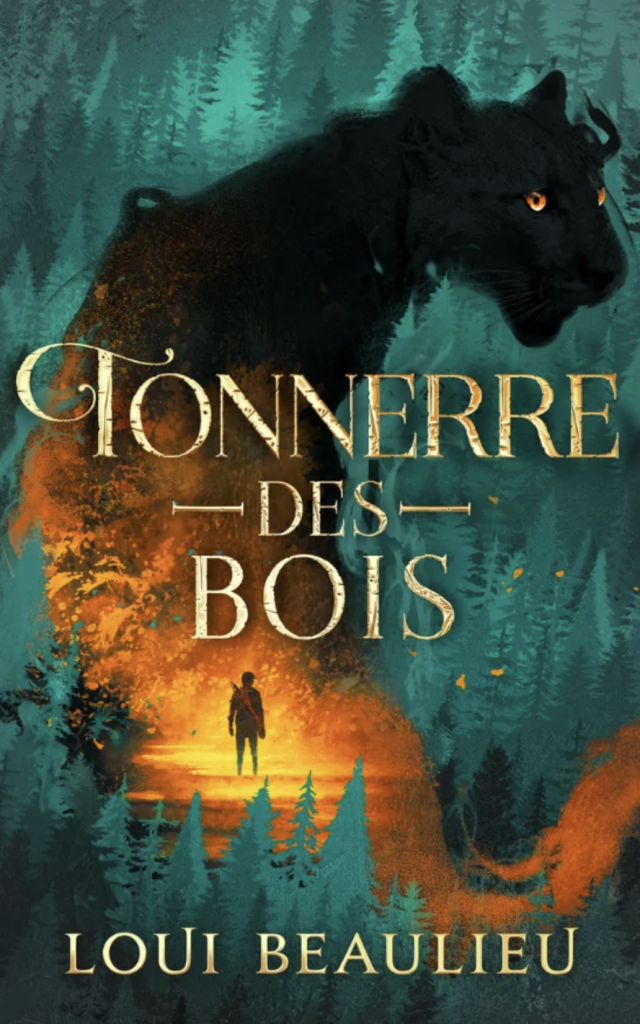
Le tout dernier roman en français des éditions Flame Arrow vient enfin de paraître, et c’est une lecture captivante. Tonnerre-des-Bois, de Loui Beaulieu, est un récit remarquablement maîtrisé sur le passage à l’âge adulte ; l’auteur explore des thèmes littéraires classiques avec tant d’habileté que l’œuvre ne donne jamais l’impression de déjà-vu.
L’intrigue suit Museau, un jeune homme qui grandit au sein du clan du Loup Gris qui Chante. À l’aube de sa maturité, il rencontre un étranger venu d’un autre clan pour annoncer à son peuple une guerre imminente. Cet homme lui donne un nom — Tonnerre-des-Bois — en référence au fauve qui a tué son fils durant le voyage. Tonnerre-des-Bois doit désormais naviguer sa nouvelle vie de jeune homme, ce qui nécessite de survivre à une chasse de plusieurs jours et de gérer l’évolution de ses relations avec ses amis les plus proches.
L’expérience de Beaulieu en tant que poète infuse sa prose. La qualité lyrique du texte m’a captivée dès le début ; à travers le regard de Tonnerre-des-Bois et celui des anciens qui l’entourent, une simple leçon se transforme en récit passionnant. La forêt est décrite avec une telle vivacité qu’on la sent croître autour de soi.
La dimension fantastique de l’œuvre réside dans la zone grise entre mythologie et réalité, ainsi que dans la manière dont le lecteur peut interpréter certains événements mystérieux du récit. Bien que je conteste l’attitude de ceux qui réduisent la spiritualité autochtone au simple rang de « fantasy », la démarche de Beaulieu — qui a consulté des chamans pour écrire ce livre et a délibérément mis en scène un peuple autochtone fictif plutôt qu’une nation spécifique — témoigne clairement d’une volonté de proposer une représentation nuancée et respectueuse de ces croyances spirituelles.
Tonnerre-des-Bois est une lecture ravissante qui vous laissera rêver de la forêt. J’espère que Beaulieu nous offrira bientôt de nouvelles aventures de ce personnage.
Un exemplaire gratuit de ce livre a été généreusement envoyé à ImaginAtlas en échange d’une critique honnête.
Good Luck, Have Fun, Don’t Die
By Magdalena Nitchi
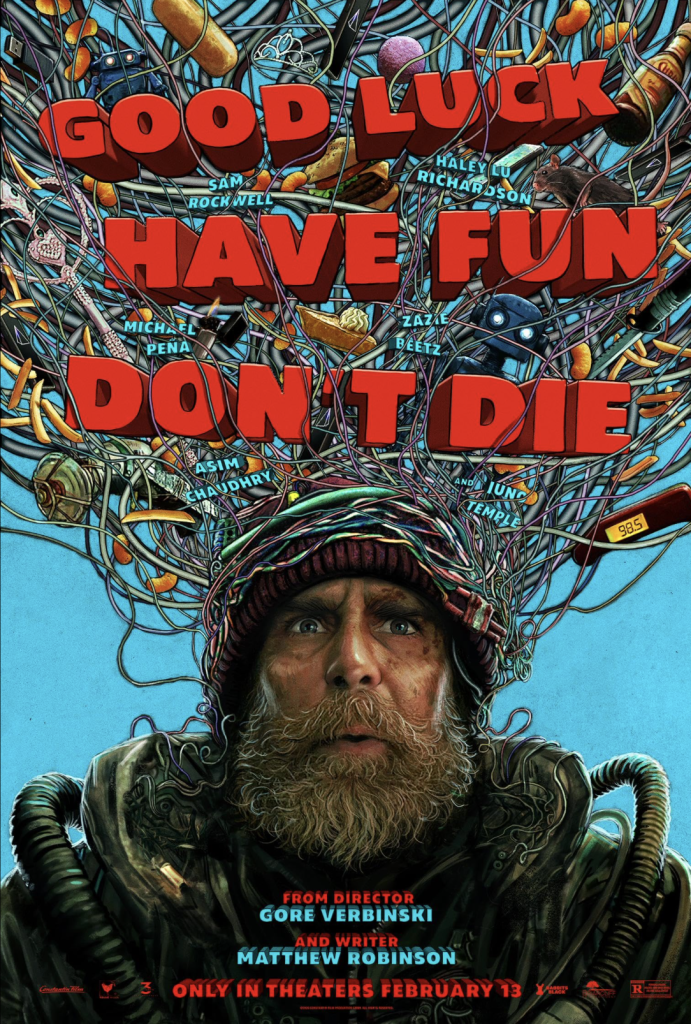
If you’re looking for a dystopian sci-fi satire that’s as darkly comedic as it is absurd, Good Luck, Have Fun, Don’t Die is the film for you. Gore Verbinski’s first feature in over ten years plunges into the action immediately, then only escalates further.
A man (Sam Rockwell)—who appears to be a drifter having a break from reality—stumbles into a diner and claims he is a time traveller from the future. His mission is to enlist a group of people to help him stop singularity, which leads to an artificial superintelligence turning future humanity into pawns in a wasteland comparable to that of The Matrix. After he threatens their lives, he recruits a variety of characters, including a Boy Scout leader, a pair of married teachers, and an unsettling woman in a princess dress and combat boots. The group makes their way out toward the house where the AI is created, dodging police and mysterious masked gunmen along the way.
Although the man’s initial babbling seems ludicrous, his predictions of exactly what will happen next on their trip hold true. Other coincidences begin to stack up as we dive into several characters’ backstories: a mob of teenagers hypnotized by their phones who chased the teachers, the mysterious cloning of a woman’s son who died in a school shooting… Something dark and wrong underpins this world, and the viewer can only hope that the man isn’t too late to stop it.
Titled after a fictional phrase players exchange before embarking on adventures in VR, Verbinski’s movie pulls at several current threads—some more deftly than others—including overreliance on AI, social media dependence, the normalization of school shootings, and abandoning this reality for a “better” artificial one. In some instances, it’s difficult to tell whether certain events in the latter half are genuine plot holes, deliberate obfuscations, or simply part of the unclear nature of the movie. Despite the confusion, the interweaving of these subjects suits the film’s eclectic nature, as each subplot operates under the same umbrella: humanity’s growing connection to AI and our struggles connecting with those around us.
Ten years from now, I have a feeling that I will look back on this movie fondly as a strange, slightly impossible fever dream.

You May Also Like

Catch of the Month – March 2021 Edition | Trouvailles du mois – Édition de mars 2021
Catch of the Month – October 2022 | Trouvailles du Mois – Octobre 2022