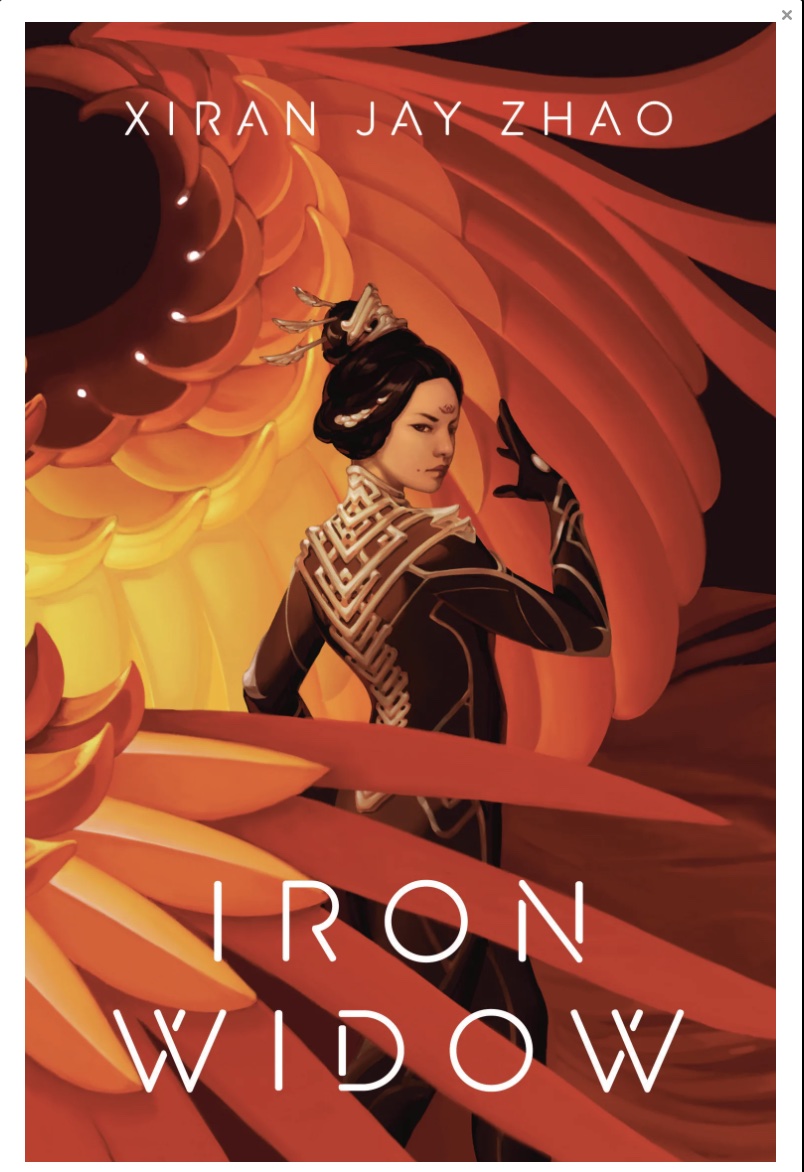
Catch of the Month — June 2026 | Trouvailles du mois — Juin 2026
Leviticus
By Magdalena Nitchi
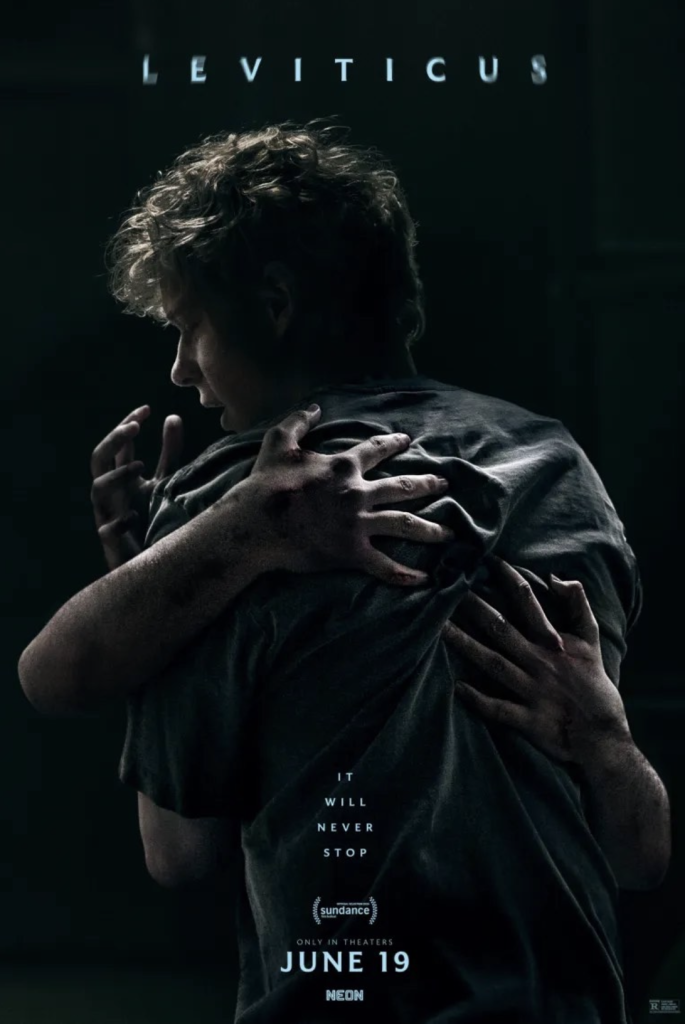
An indie queer supernatural horror film? I was ready for Leviticus months ago, and went into the theatre eager to see how director Adrian Chiarella explores the damage caused by religious homophobia.
In Leviticus, teenager Naim (Joe Bird) and his recently widowed mother (Mia Wasikowska) move to a remote town in Western Australia. While she finds great solace in the tight-knit Christian community there, Naim is far more interested in his classmate Ryan (Stacy Clausen) and their growing intimate relationship. However, when he finds Ryan kissing the son of his small church’s pastor, he impulsively outs the two boys. They are then forced to endure a ceremony by a “deliverance healer”, then become haunted by an evil presence that disguises itself as the object of their sensual desire in order to brutally attack them. As they fight to survive, Naim and Ryan must face societal and supernatural opposition to their relationship.
Comparisons to It Follows aren’t necessarily without merit, but the horror of this story stems not from the spectre of sexual desire, but rather from its depiction of right-wing Christian homophobic beliefs and the inevitable violence that grows from them. Although the film is closer to a thriller than a horror, it is the haunting presence and possibility of assault from all directions that create an intense, Hitchcockian tension in all scenes. The psychological horror stemming from a complete lack of safety—to the point where even a romantic scene with Naim and Ryan had me tense in my seat—is what sticks with the audience.
The cinematography is also superb. As Naim wanders aimlessly through the town, one truly feels the loneliness of a voyeur peering into the lives of everyone around him. Frankly, given its sub-90-minute runtime, I would have enjoyed even more experimentation with shots and montages.
If you’re able, I would highly encourage you to see Leviticus in theatres. Not only is the story compelling and well-executed, but supporting this kind of project shapes the kind of stories we will see on the big screen in the future. Pride started as a protest, and while movies like this may be painful to watch for some, they also stubbornly declare: “we are here, and we aren’t going anywhere”.
Kipo et l’âge des Animonstres
Par Magdalena Nitchi
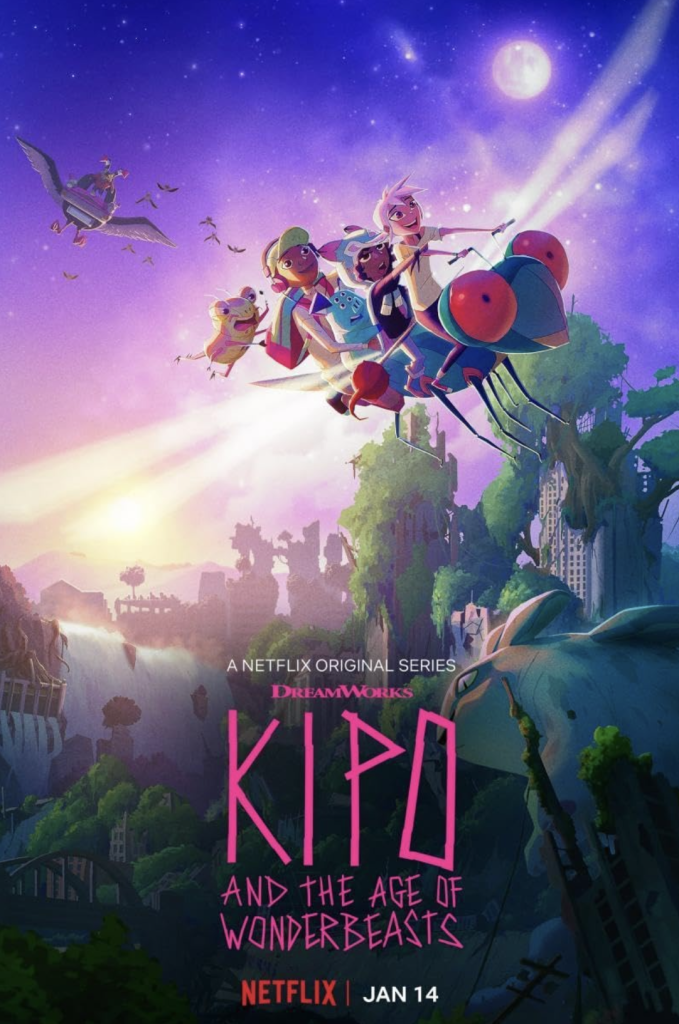
C’est avec tristesse que j’ai appris le retrait de Netflix de Kipo et l’âge des Animonstres, une série d’animation offrant une représentation exceptionnelle de la communauté LGBTQ+ et une diversité raciale très appréciée.
La série suit une jeune fille de 13 ans vivant dans un monde situé plus de deux siècles après une apocalypse. Élevée dans un abri souterrain, Kipo se retrouve propulsée à la surface après la destruction de son foyer par un « méga » — un animal mutant monstrueux. Son père ayant disparu à la suite de l’attaque, elle souhaite désespérément le retrouver. Pendant son parcours, elle fait la connaissance de plusieurs survivants habitant depuis toujours à la surface. Cependant, tous devront affronter Scarlemagne, un mandrill bien décidé à réduire en esclavage ce qui reste de l’humanité et à bâtir un paradis pour les animaux mutants qui peuplent la surface.
Tout au long des trois saisons, les personnages 2SLGBTQ+ sont intégrés de manière naturelle dans l’univers. Par exemple, lorsque Benson, l’un des membres principaux du groupe de Kipo, fait son coming out, il est accepté tel qu’il est, sans la moindre complication. Bien que sa sexualité ne soit pas au cœur de l’intrigue, elle revient au fil des saisons, notamment lorsqu’il rencontre un intérêt amoureux. Ces moments me rappellent d’autres séries d’animation, comme Steven Universe ou La Légende de Korra. Sans leurs auteurs qui ont dû se battre pour intégrer des personnages queer dans leurs histoires, une représentation aussi ouverte et décomplexée serait encore absente des dessins animés pour enfants.
Comme c’est le cas pour de nombreuses séries destinées au jeune public, une grande partie de l’œuvre repose sur l’amour familial entre Kipo, Benson, Wolf et deux animaux mutants. La coopération est la clé de leur survie, et l’ouverture d’esprit ainsi que l’optimisme radical de Kipo — même face à un monde qui menace son existence — lui ouvrent bien des portes.
Kipo et l’âge des Animonstres est une série d’animation créative inspirée d’animés japonais, avec une bande-son envoûtante et un univers richement développé. Elle est un véritable régal pour les sens et une source de positivité bien appréciée pendant ce mois de la fierté, qui apprend aux plus jeunes l’importance de la tolérance envers les autres. Le fait qu’elle se fasse retirer du site de streaming le plus important de notre génération est non seulement tragique, mais aussi alarmant considérant le climat politique d’aujourd’hui.
Kissing the Witch: Old Tales in New Skins
By Catherine Hall
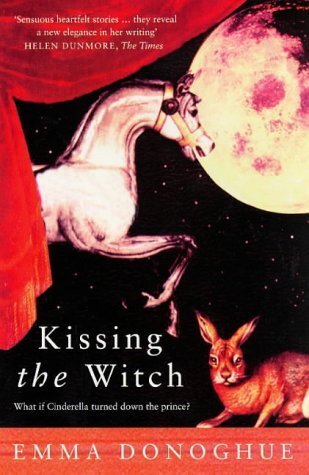
In Kissing the Witch: Old Tales in New Skins, acclaimed Irish-Canadian novelist Emma Donoghue subverts well-known fairy tales through a feminist and queer lens. Each of the twelve revisions of classics such as Cinderella, Rapunzel, and Rumpelstiltskin, along with the original short story that concludes the collection, recounts the trials of a heroine oppressed by heteronormativity who eventually comes to an awakening of their desires. Inspired by oral traditions, the stories in this volume are connected through a narrative chain, where the heroine of one tale becomes the narrator of the following narrative.
This collection may not be what readers envisage when they think of queer or sapphic literature in the era of romantasy, but it has a lot more to offer than romance and depicts queerness not only in terms of sexuality but as a subversive response to oppressive social standards. For example, in the collection’s first story, “The Tale of the Shoe,” Cinderella does not fall in love with Prince Charming but with an older female character, subverting the myth of heterosexual desire. One of the most striking moments occurs in “The Tale of the Rose,” a Beauty and the Beast retelling, when the heroine discovers that the beast is actually a woman.
The most overtly lesbian tale is the final entry, “The Tale of the Kiss,” an original story about a barren outcast witch. One day, she is visited by a local girl’s mother and father, who seek the witch’s help to control their daughter. The father wants her to stop avoiding men, while the mother wants her to stop wandering outside. But the witch refuses to tame her and instead misleads the parents into thinking that trying to control their daughter will have disastrous consequences, allowing her to choose her own path. In payment for the witch’s help, the girl asks what she can offer her. The witch asks for a kiss, which awakens new desires in her.
In the almost thirty years since the publication of Kissing the Witch, revisionist fairy tales that seek to give voices to previously disempowered heroines have become more popular and numerous in the fantasy canon, but the questions of identity and sexuality, along with Donoghue’s dazzling lyrical prose, have made this collection stand the test of time.
Love After the End: an Anthology of Two-Spirit & Indigiqueer Speculative Fiction
By Magdalena Nitchi
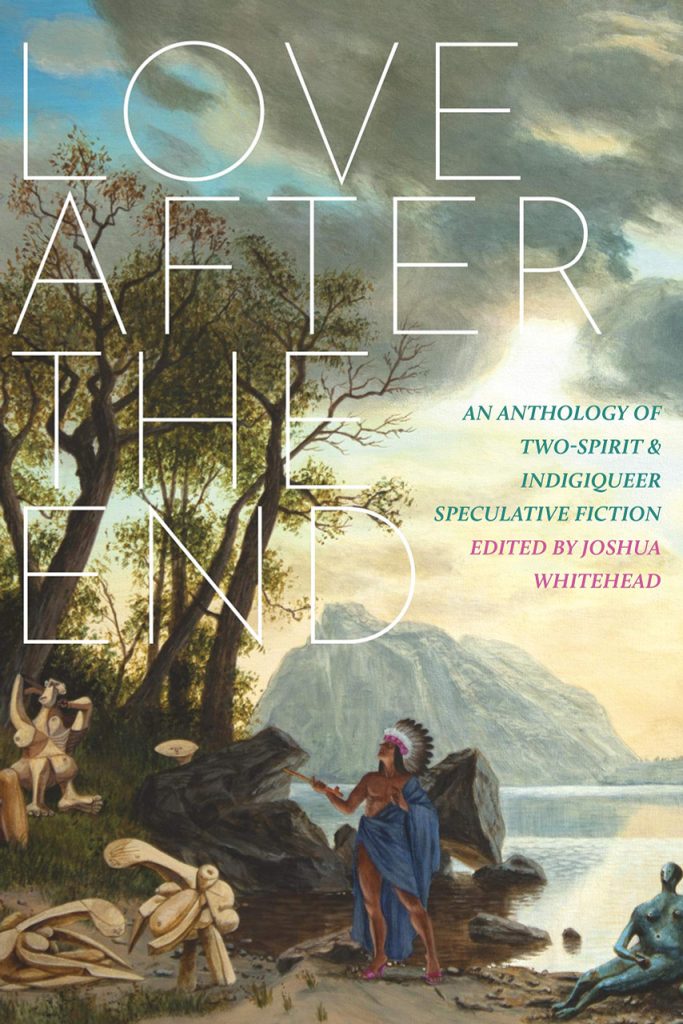
Love After the End: an Anthology of Two-Spirit & Indigiqueer Speculative Fiction delivers a gorgeous collection of the sort of hopeful post-apocalyptic fiction that is a balm in uncertain times. Edited by Joshua Whitehead, the anthology contains nine short stories centre on characters from nations such as the Cree and Anishnaabeg. From surviving the apocalypse as a native girl to cyborg NDNs who must fight to be taken to a more livable planet, each author tackles the love and community-building essential for Indigenous survival and the integral role that Two-Spirit people play within their societies.
My favourite piece in the collection is “The Ark of the Turtle’s Back” by jaye simpson, in which the protagonist, her lover, and the two teenagers they have adopted are forced to flee their reservation due to the “International Water Ration Act of 2167” and off-planet facilities requiring increasingly forced labour. Will they be able to move forward and accept the environmental cost of seeking survival? If so, how will they build a relationship with a land radically different from their ancestral home? jaye simpson writes each character in this story—flaws, messy history, and all—with a profound understanding of their ideological position and an intimate knowledge of how queer found families operate, and she offers a nuanced yet hopeful portrayal of seeking refuge.
As Joshua Whitehead writes in the introduction of the anthology, “now more than ever we need these stories”. When everything may feel hopeless, Love After the End reminds us that despite each difficulty and intracommunity issue they have faced, Indigenous people have already lived through an apocalypse. They have made it to the other side. And to continue moving forward, it is not only encouraged but necessary to continue engaging with radical optimism.


You May Also Like
Sombres secrets et aventures endiablées
Weekly Wheel Rewind: Secrets of the White Tower