Catch of the Year 2025 | Trouvailles de l’année 2025
Andor Season 2
By Fred Azeredo
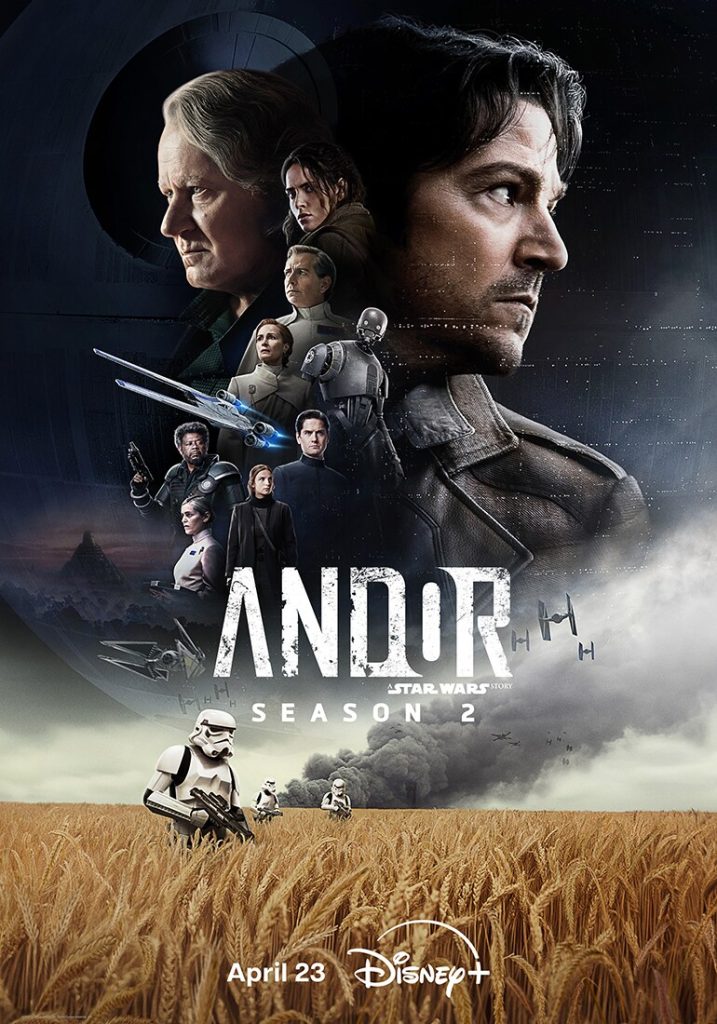
The irony of Disney—worker exploiter and newly-minted AI shill—producing one of the most radical pieces of mainstream media of recent years does not escape me. Yet what matters is that Andor exists, and the Star Wars universe is infinitely better for it. Tony Gilroy’s breathtakingly detailed exploration of the Rebellion’s early years manages to build on a stellar first season with a second that sets a new standard for mass-medium political storytelling. It’s not just “good for Star Wars” or “good for a genre show”—it’s the best show of the year, full stop.
What I love most about Andor’s second season is how it never shies away from the messiness endemic to real-life revolution. Our hero, Cassian Andor, spends two episodes fighting off a squad of fellow rebels torn apart by factionalism. The Rebel mastermind, Luthen, kills innocents we’ve grown attached to in the name of the cause. Even Imperials like Cyril Karn are weirdly complex in their motivations, as opposed to cackling caricatures. Complicated moral choices are everywhere in Andor’s world, and no one navigates them all perfectly.
Yet, at the same time, this is not a ‘90s antihero story in which wanton murder and edgy amorality stand in for thematic depth. Andor is shot through with radical hope even at its darkest moments; this is, after all, the story of the unsung heroes whose work eventually led up to the Empire’s downfall in Return of the Jedi. It’s a show that says: the struggle can be won. Every positive action, no matter how minor, still counts in the end. In times like ours, when new waves of oppression come so frequently that it’s hard to even stand as they crash over us, such storytelling could not be more vital. Even if you have to sign up for Disney+ to see it… honestly, it’s worth it.
Other recommendations:
The Ultimates by Deniz Camp
The Secret Agent directed by Kleber Mendonça Filho
Superman directed by James Gunn
Death Stranding 2: On the Beach directed by Hideo Kojima
Sinners
Par Magdalena Nitchi
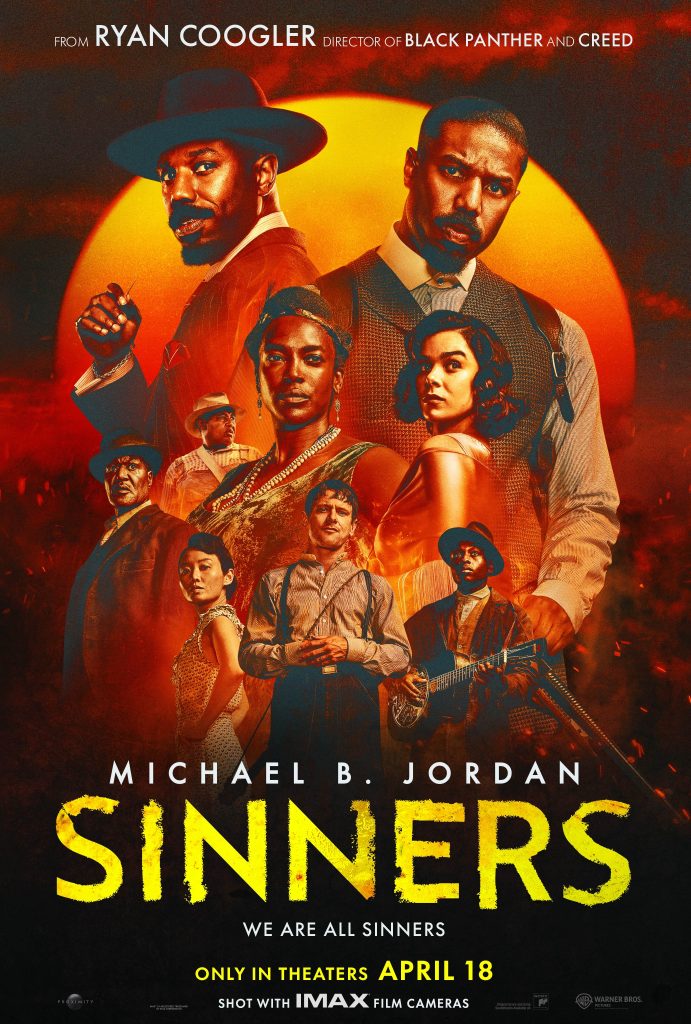
Si vous n’avez pas encore vu le chef-d’œuvre Sinners de Ryan Coogler, commencez 2026 en beauté et visionnez ce film. Dès sa diffusion en avril dernier, j’ai tout de suite su que ce serait l’un de mes films préférés de l’année. Le fait que ce film d’horreur surnaturelle historique continue de recevoir des éloges depuis des mois ne fait que confirmer sa qualité exceptionnelle.
L’histoire du protagoniste, Sammie (Miles Caton), et de ses cousins jumeaux Smoke et Stack (Michael B. Jordan) offre un regard sans concession sur le racisme envers les Afro-Américains dans le sud des États-Unis pendant les années 1930. Leurs périples en essayant d’ouvrir un juke joint mènent à un apogée terrifiant et violent, dans lequel un petit groupe d’humains doit se défendre contre une horde de vampires. Ce film est une véritable déclaration d’amour au blues, à l’histoire, à la culture afro-américaine et même aux vampires, qui sont présentés avec de nouveaux éléments tout en respectant certains clichés classiques.
Bien que tous les personnages soient dotés de profondeur et de moments marquants, j’ai particulièrement apprécié la manière dont les personnages féminins ont été dépeints, notamment Annie (Wunmi Mosaku). Sa dynamique électrique avec Smoke et son chagrin suite à la perte de leur enfant m’ont immédiatement captivée. En tant qu’herboriste pratiquant le Hoodoo, ses connaissances traditionnelles sont aussi utilisées pour combattre les vampires. C’est formidable de voir une femme forte et courageuse, qui reste inébranlable face au danger.
Avec Sinners, Coogler utilise avec brio l’horreur — surnaturelle et réaliste — pour créer un récit émotionnel complexe, qui explore les douloureuses histoires d’oppression et de colonialisme, les difficultés à construire un avenir lorsque ces histoires continuent de hanter le présent, et la manière dont les personnages font face à leurs choix. J’ai déjà revu ce film deux fois et chaque fois, j’ai découvert de nouveaux détails et éléments narratifs — sûrement le signe d’un film exceptionnel et intemporel.
Autres recommandations:
Five Points on an Invisible Line de Su J. Sokol
Wollstonecraft de Sarah Berthiaume
Les Cités de Poussière de Nell Pfeiffer
Dinosaur Sanctuary de Itaru Kinoshita
Queens of the Dead réalisé par Tia Romero
The River Has Roots
By Catherine Hall
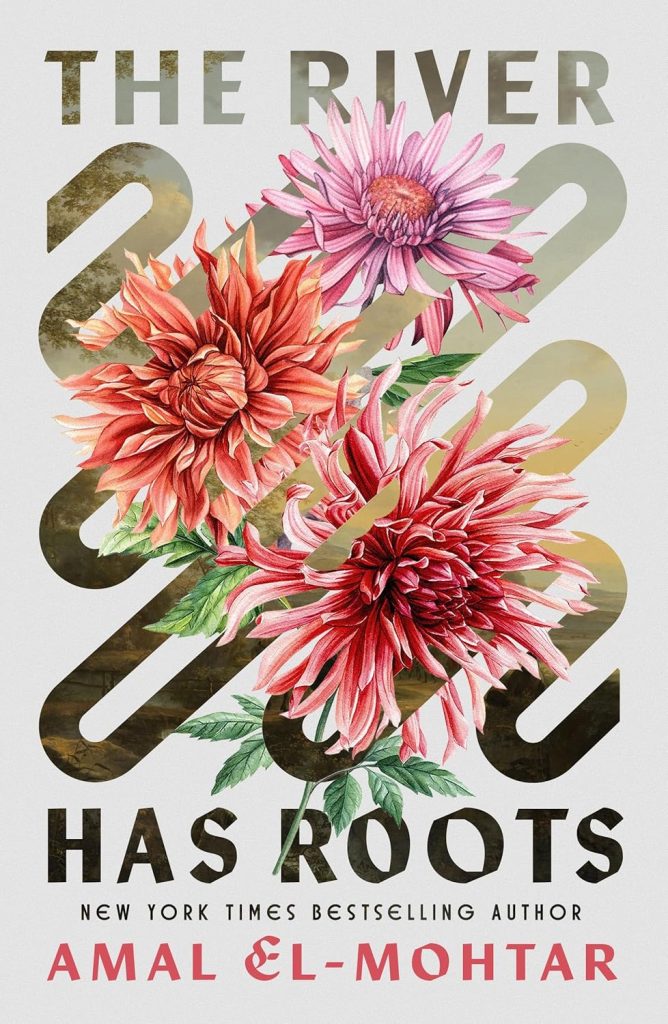
One chapter, and I knew Amal El-Mohtar’s highly anticipated solo debut would be one of my favourite releases of the year. The River Has Roots, a retelling of the popular Scottish murder ballad “The Two Sisters,” brings us to the town of Thistleford, where a magical river flows down into Faerie, known as Arcadia. Yet unlike the ballad, in which a young woman drowns her sister out of romantic jealousy, El-Mohtar weaves a compelling, ethereal tale of sisterly love.
The Hawthorn family is known for its willow-wood business and the stirring duets of sisters Esther and Ysabel. When a greedy suitor forcibly separates the sisters on opposite sides of the border between Thistleford and Arcadia, they must bridge an impossible distance to be reunited. In El-Mohtar’s world, magic is a matter of grammar, a word that shares its roots with gramarye, a Middle English word for the theory and practice of enchantment. Fittingly, the lyrical prose is truly magical from start to finish, with alliteration, riddles, and puns drawing us in further.
Still, it is the unwavering bond between Esther and Ysabel, the two sisters at the heart of this tale, that truly leaves its mark. In their childhood, the sisters are inseparable, but as they grow up, they are pulled in different directions. Yet ultimately, the sisters’ differences prove complementary. What makes El-Mohtar’s depiction of sisterhood so affecting is that it is reinforced at the level of language itself. Sentences linger, and conjunctions insist on togetherness, echoing the way Esther and Ysabel remain present in one another’s lives across distance and tragedy.
When I put the book down, I felt compelled to tell my own sister how much she means to me, though words fell short of expressing my true feelings. In that failure, I found another resonance with El-Mohtar’s work. Like the spells and songs that bind Esther and Ysabel, language here is powerful precisely because it is fragile: it risks inadequacy to make connection possible at all.
Other recommendations:
Sunrise on the Reaping by Suzanne Collins
Tailored Realities by Brandon Sanderson
Katabasis by R.F. Kuang

You May Also Like
Une nouvelle nuance de blanc
Interviews at the Blue Metropolis: Nancy He