Catch of the Month – January 2026 | Trouvailles du mois – Janvier 2026
The Cellar Below the Cellar
By Magdalena Nitchi
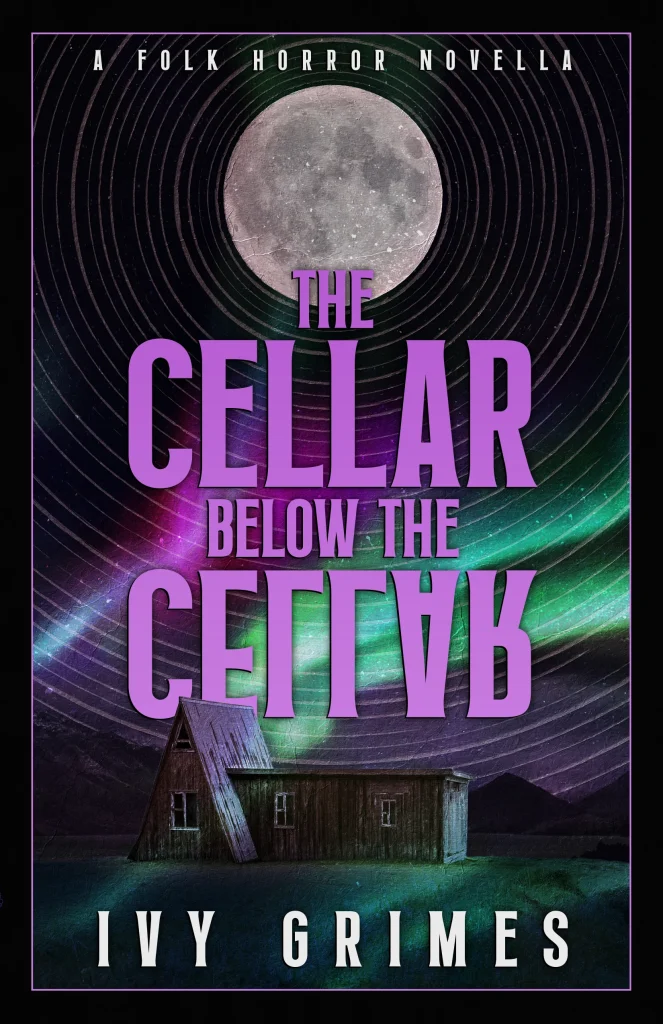
When I heard that the latest publication from Violet Lichen Books was a folktale-inspired horror novella, I knew I had to read it right away. Ivy Grimes’ The Cellar Below the Cellar beautifully combines elements from the Alpine figure Frau Perchta and the Russian fairy tale “Vasilisa the Beautiful”.
It starts, as all good stories do, at the end: Jane is forced to take refuge in her grandmother’s isolated house after a mysterious solar storm knocks out all electric power. Following her mother’s passing, Jane was raised by her grandmother, a strict woman who insists that they use her extensive collection of doomsday supplies to help their few neighbours. With the power grid totally dead and clean water running out, they must quickly adapt to this new way of living while the weather is still warm.
However, it soon becomes apparent that there’s something off about the situation; not only is Jane’s grandmother hiding secrets, but the Ospreys, their demanding neighbours, keep piling chores on her and treating her as if she’s a child. On top of the literal atmospheric phenomena, the eponymous subcellar inspires a potent atmosphere of creeping dread, and Jane can’t quite pinpoint why she’s so terrified of going down there. Grimes plays with ambiguity: is Jane inheriting her late mother’s mental health issues, or is there really something supernatural afoot?
Without going into spoilers, I will say that I love how the fantasy elements of this story are incorporated. Jane’s gradual immersion is the perfect way to keep the reader guessing what may really be going on, and what’s waiting for Jane down in the cellar. It’s impressive how well Grimes conveys entire seasons passing within such a limited word count, which makes Jane’s acceptance of the strange developments much more believable.
The Cellar Below the Cellar (now available for preorder) poignantly deals with death and grief, including recent losses and moving on from old wounds, as well as the importance of community and embracing one’s talents within it. Grimes’ penchant for the morbid and strange perfectly suits the tone of the original, darker versions of fairy tales, and left me enraptured with every page.
Fionna and Cake S2
Par Magdalena Nitchi
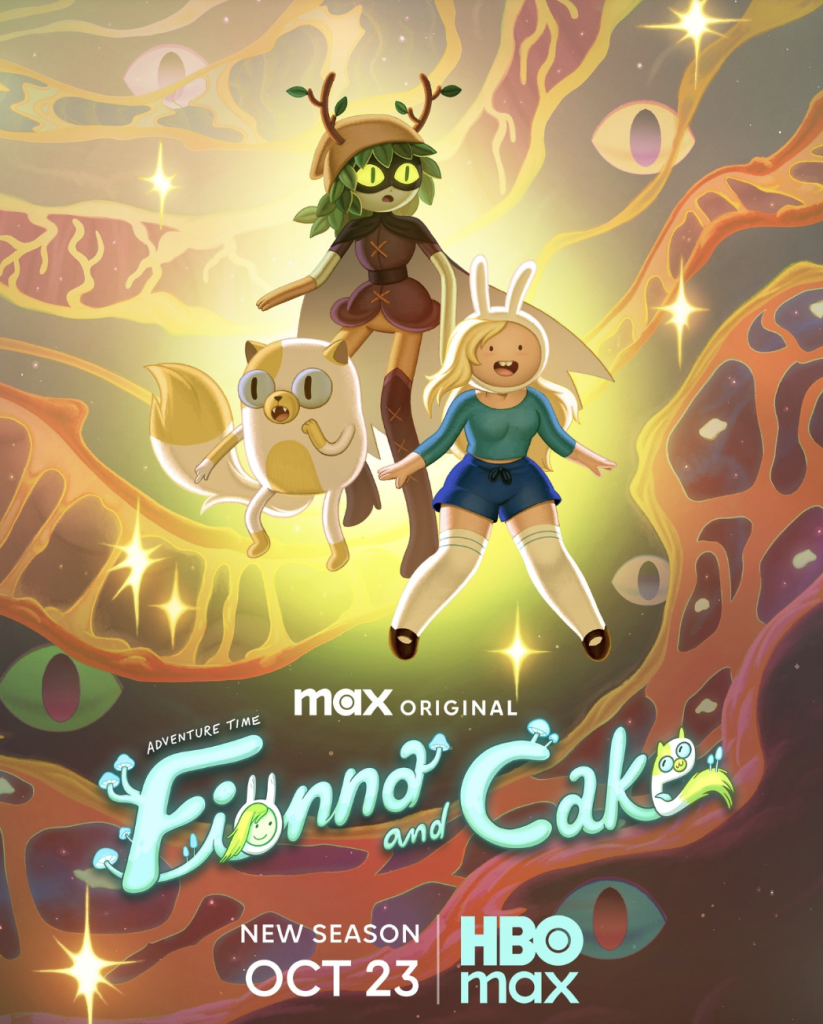
Suite à la merveilleuse première saison de Fionna and Cake, une aventure amusante à travers une multitude d’univers, je savais que j’allais me régaler avec la sortie de la deuxième saison. La première saison avait des enjeux considérables : le destin du monde entier de Fionna était en péril ! La deuxième, en revanche, prend le temps d’explorer les émotions en profondeur en mettant en danger les amitiés de Fionna et la vie de Finn, le héros que nous connaissons et aimons.
Ooo et le monde de Fionna sont à nouveau connectés, cette fois-ci grâce à Huntress Wizard, un personnage énigmatique qui se plonge désespérément dans la magie pour empêcher la mort de Finn. Lorsqu’elle se retrouve dans l’univers de Fionna sans aucun moyen de rentrer chez elle, celle-ci accepte de l’aider. Cependant, Fionna et son chat magique, Cake, doivent également aider leurs propres amis à sauver leur espace communautaire, menacé par une femme d’affaires cynique qui souhaite le transformer en parking. Déjà débordée, Fionna doit balancer les problèmes plus terre-à-terre de sa vie et les problèmes magiques de grande ampleur auxquels Huntress Wizard est confrontée.
C’est difficile d’exprimer à quel point cette saison était formidable. Si vous n’avez pas suivi Adventure Time ou Fionna and Cake, vous serez certainement perdus. Cependant, pour les fans, ce chef-d’œuvre offre une exploration fascinante des personnages et de leurs relations à travers différents mondes. J’ai particulièrement apprécié la complexité de Fionna et Huntress. Une grande partie de cette saison est consacrée à leur apprentissage de la communication et à la manière dont elles gèrent leurs problèmes respectifs avec plus de maturité.
Les créateurs prennent le temps d’explorer en profondeur la psychologie des différentes versions de Finn à travers les univers, et d’aborder les problèmes d’estime de soi liés au statut de héros. Le besoin constant d’adrénaline, le sacrifice de soi… Il devient vite évident que Fionna et Finn doivent apprendre à accorder plus de valeur à leur propre vie et à cultiver leurs relations en dehors de ce qu’ils peuvent faire pour les autres.
La deuxième saison de Fionna and Cake a une fois de plus prouvé qu’Adventure Time est un univers unique. Il aura toujours une place spéciale dans mon cœur, quelle que soit sa forme. Si vous n’avez pas encore découvert ce magnifique spin-off, c’est le temps d’y plonger.
Hellboy
By Fred Azeredo
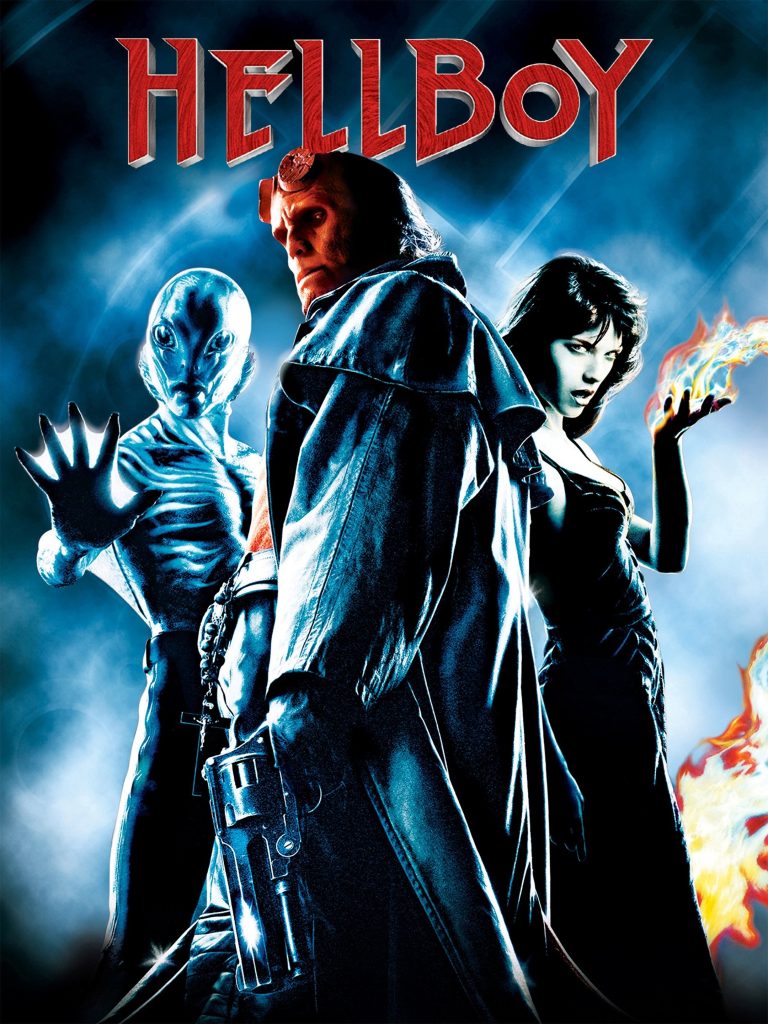
While we haven’t covered it too much on ImaginAtlas, Mike Mignola’s Hellboy comic is one of my enduring passions. Seamlessly blending folklore, pulp, and gorgeous art—what’s not to like? And indeed, Hellboy is justly celebrated by comic nerds everywhere. You know what doesn’t get the recognition it deserves, though? Guillermo del Toro’s excellent 2005 film adaptation, which I somehow hadn’t gotten around to watching until now. With every dire franchise reboot we get, from the lacklustre 2019 film to the 2024 micro-budget Crooked Man, this film’s special achievement becomes clearer.
Consider what could have gone wrong—which is to say, everything. A story like this, starring a demon summoned from Hell by Nazis (and Rasputin) who fights giant frogs and other monsters, could very easily have become campy in other hands. It’s part of the standard Hollywood playbook: when faced with outlandish source material, either play it for laughs or make it as gritty and ‘realistic’ as possible to curry respect. Del Toro, to his credit, does neither. He keeps Hellboy’s bright red skin, his fondness for cigars and pancakes, and his fish-man sidekick, and simply presents them on their own terms. It helps, of course, that he has a perfectly cast Ron Perlman in the title role.
This is not to say the film doesn’t step wrong; the addition of a point of view human character is basically pointless, and a lot of the action feels samey after a while. Moreover, the decision to adapt Seed of Destruction, the first Hellboy arc, is understandable—but it’s still from a time when Mignola was finding his feet. For my money, starting with more mature material like Conqueror Worm would have been ideal, though perhaps Del Toro felt audiences weren’t ready for ten-story-tall Nazi maggot-worms. But, despite all these quibbles, this is doubtlessly the best Hellboy adaptation we’re ever likely to get. For such an eccentric and hard-to-adapt story as this, that’s one… hell… of a treat. I’m sorry, I had to.
You May Also Like
Catch of the Month – May 2023 | Trouvailles du Mois – Mai 2023
Rings of Power Episode 8: Apparently, One Does Simply Walk Into Mordor