The end of April brings a staple of the Montreal literary world: the Blue Metropolis International Literary Festival. Running in-person from Thursday, April 23rd, to Sunday, April 26th, the large literary festival with programming in 9 languages—including among others, French, English, Ukrainian, Cree, and Japanese—aims to bring together people from diverse languages and cultures to share the pleasures of reading and writing. After having the pleasure of attending and conducting interviews in 2025, I was eager to see the festival’s 2026 lineup.
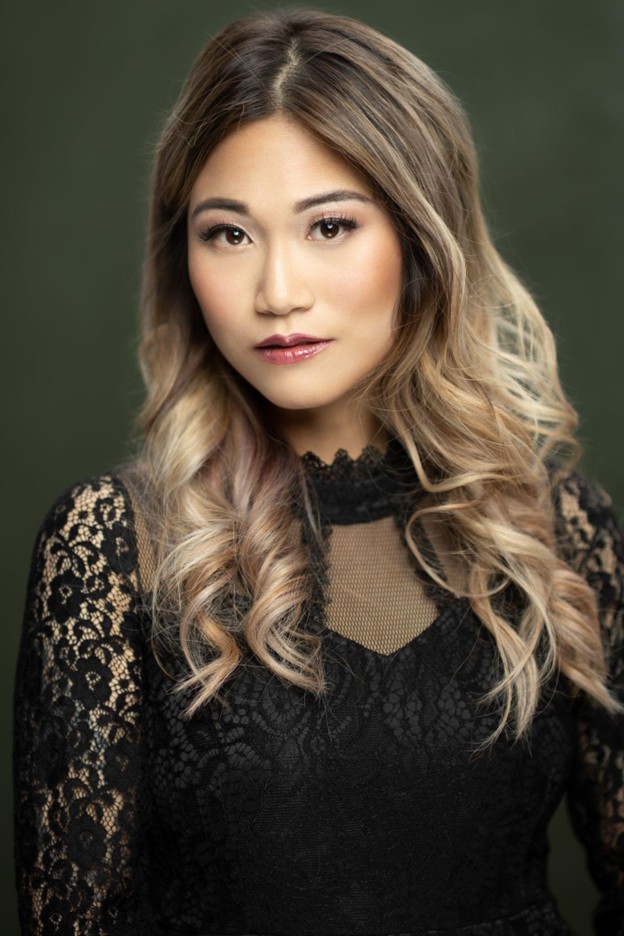
Among the Blue Metropolis’ events this year is The Power of POV in Divisive Times, where several authors who have employed fascinating perspectives in their novels will discuss how characters’ voices can entirely shift a narrative. One of these panellists is the magnificent Lindsay Wong, who initially gained renown for her memoir The Woo-Woo: How I Survived Ice Hockey, Drug Raids, Demons, and My Crazy Chinese Family. Wong has pivoted into horror in recent years, with her latest novel, Villain Hitting for Vicious Little Nobodies, being published earlier this year.
ImaginAtlas: When did you first hear about the Blue Metropolis International Literary Festival? Are there any events you’re looking forward to or authors you want to meet?
Lindsay Wong: I was very honoured when fellow author and longtime friend from UBC’s BFA program in Creative Writing, Gina Leola Woolsey, first invited me to participate [in] the panel. I’m looking forward to sharing space with Gina, Hollay Ghadery, and Sky Gilbert and discussing our new books.
Writing is such a solitary act, and it is such a treat to gather with other writers, publishing professionals, booksellers, and readers. I am hoping to attend every event possible on Saturday, April 25 (I’ll be flying in late on the 24th and leaving early on the 26th). The conversations that happen at festivals can be magical, as well as the lifelong friendships that inevitably form. I’m actually really shy, so if you happen to see me, please say hi! I don’t bite or bark, even if my literary persona on the page seems scary.
ImaginAtlas: You’ve written books for quite a few genres, including your stunning nonfiction autobiography, but in recent years, you have pivoted more towards speculative fiction and horror, especially immigrant horror. What inspired you to start writing in these genres?
Wong: What draws me to crafting speculative fiction and immigrant horror is that there is such freedom in using the genre and its tropes to explore identity and body politics, racism, shame and capitalism when you are living in a society that is not always kind or generous to marginalized and oppressed individuals. In creative nonfiction, you are limited by fact, and you can only stretch the emotional truth so far before you teeter into fiction. Horror is political and subversive, and as a woman of colour who grew up in a very conservative immigrant household, I think it’s impossible not to write about the cultural beliefs and superstitions that affect your way of being and moving in this world. I was brought up to be very afraid and suspicious of everyone and everything, and I’m still very afraid as a grown person. My writing horror is a way for me to claim back some of my fear of living and taking up space in this world.
ImaginAtlas: Your collection of short stories, Tell Me Pleasant Things about Immortality, and your novel Villain Hitting for Vicious Little Nobodies both focus on the line between life and death, and how it can blur. What is it about that grey area that fascinates you?
Wong: In Chinese culture, the dead never leave you, and I think it stems from ancestral worship, the idea that family bonds last forever. It’s very patriarchal and Confucian, and I think this belief is both terrifying and compelling on multiple levels. I always imagine my mother haunting me for eternity, and I will never get rid of her nagging [laughs]. I think this is why I write parallel worlds of both dead and living existing simultaneously; we never fully cease existing as people, and those we love and hate and tolerate will endure beside us in perpetuity. It’s comforting to know we might not end, but also horrifying to think about the conflict that will last forever. Family bonds are complicated. I remember my parents asking me to purchase a burial plot beside them, and I was like, “Nope, I don’t want to spend eternity with you.” I mean, a writer needs her space, you know? I’ll still be writing books in the afterlife (in the cemetery in the next town over).
ImaginAtlas: There can sometimes be issues with works of speculative fiction that contain traditional spiritual beliefs being marketed as fantasy rather than reality. Have you encountered this before? Do you feel comfortable calling your work supernatural or fantasy, given that customs such as minghun (ghost marriage) are still practiced today?
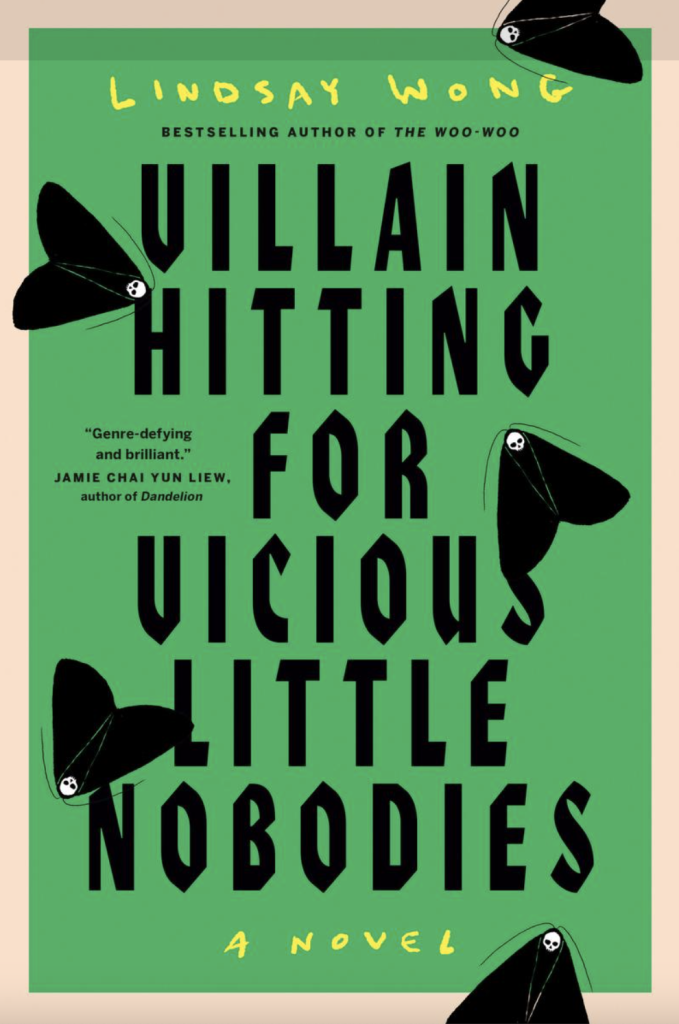
Wong: Admittedly, I found it very strange when I saw that Villain Hitting for Vicious Little Nobodies was marketed as a dark fantasy, as the plot is rooted [in] minghun, which is a real custom that stems back to the Tang Dynasty. Marketing and booksellers know more about selling books to audiences than me, and I wonder if this burial custom seems too bizarre or frightening to non-Chinese readers, so it needs to be categorized in the fantasy genre. Villain Hitting for Vicious Little Nobodies is a blend of horror, comedy, satire, historical fiction, and dystopian with mythological elements, but I would never have categorized myself as a fantasy writer. It’s fascinating.
ImaginAtlas: The Blue Metropolis’ theme this year is “Words for Understanding One Another”, a topic that definitely relates to your upcoming panel about point of view. Has your approach to point of view shifted over the years? Are there challenges in writing multiple points of view, as you did in Villain Hitting for Vicious Little Nobodies?
Wong: When I first started writing as an undergraduate and then as a professional, I honestly struggled with the third-person. I stayed with first-person and cultivated a strong voice because I always found third-person POV difficult to do well. I could write it, but the result just felt awkward and clumsy and not natural to the character’s interiority. Villain Hitting for Vicious Little Nobodies has four POVs, so it was such a technical challenge to write. I think I screamed into a pillow several times! There was also lots of crying and eating family-sized bags of mini-eggs [laughs]. Once I figured out that this novel was essentially a fugue with four distinct voices, it became easier for me to seamlessly “head hop” from character to character and weave the[ir stories] together. I understood then that I was writing a polyphonic narrative with texture.
ImaginAtlas: Many of your short stories, as well as Villain Hitting for Vicious Little Nobodies, centre female characters. What do you hope people will take away from the perspectives of the women that you bring to the foreground?
Wong: l write Chinese female characters who are strong and hopefully push back against narratives and stereotypes of Chinese Canadian women as meek, submissive, and “ornamental.” Locinda, the protagonist, and her grandmother, Baozhai, are characters who are complex, flawed, messy, and drowning in their intergenerational trauma, but they ultimately want to do good by and for each other, but don’t know how. It’s an unconventional relationship, but I think these characters embody universal truths about desire, want, self-love, ambition, and autonomy, when patriarchy and culture tells you that you are only worth your external beauty and reproductive abilities; hence, when Locinda sells her body to be a corpse spouse to save her family from a Chinese triad, she finds her internal strength despite the horrific decisions and mistakes that she makes to redeem herself.
ImaginAtlas: I saw on your Instagram that you haven’t been to Montreal before. What are some things you’re looking forward to in the city?
Wong: l am so excited to visit Montreal and eat your smoked meat and poutine. I am very food-motivated, can you tell? If you have meat and poutine recommendations, please send them my way!
ImaginAtlas: Is there anything else you’d like to add?
Wong: Our panel takes place on Saturday, April 25, at 10 AM at HOTEL10. I hope to see you there! Please bring me your best food recommendations and tell me if you’re also afraid of your mother haunting you for all eternity. I can’t be the only one.